

Getting Dressed Shouldn’t Be Hard
Just Follow Some of These Easy Tips
Styling in the Bay Area for over 5 years has taught me a lot about my clients’ mindsets when it comes to getting dressed. In an area where so many people work in tech — and let’s be honest, fashion isn’t exactly a priority — there’s a strong desire for simple “rules” that make getting dressed easier. Sometimes this can be frustrating, because so much of style is creative, subjective, and rooted in self-expression.
Other clients have been bombarded with “fashion rules” their whole lives. Being told they can’t wear horizontal stripes, can’t wear white after Labor Day, or that petites can’t pull off wide-leg pants doesn’t help anyone — it just creates confusion.
So I’ve been thinking a lot about how to give clients guidance that’s actually useful without boxing them in. I landed on 7 tips that will help you get dressed without turning style into a set of rigid rules.
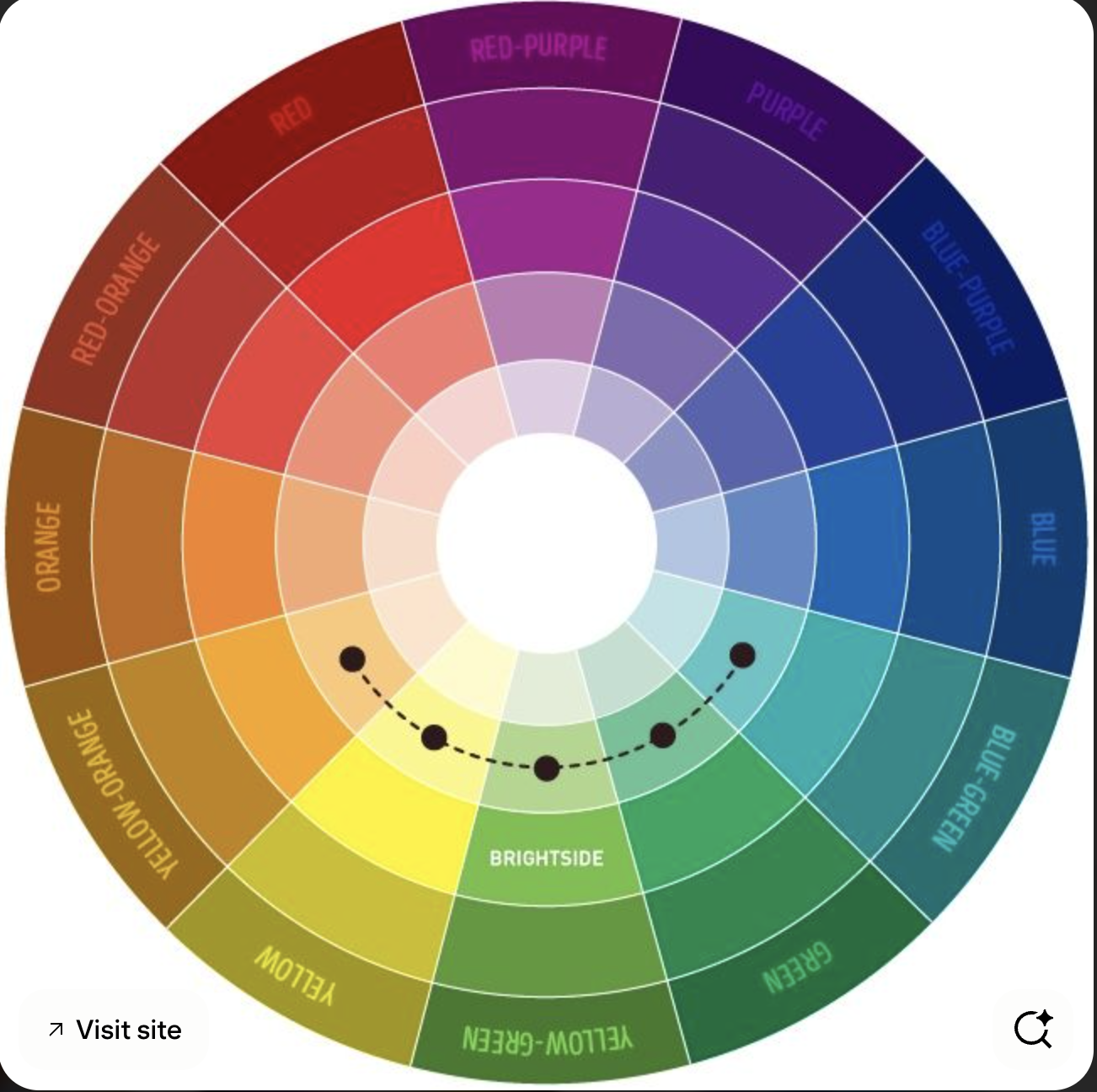
Keep Color Theory Top of Mind
At the core of color theory is the color wheel, which organizes hues into relationships: complementary colors sit opposite each other (like blue and orange, or red and green) and create high contrast and visual energy when paired. Analogous colors sit adjacent on the wheel (like yellow, yellow-green, and green) and feel harmonious and cohesive. Saturation also matters — pairing a muted tone with a saturated one adds depth and prevents a palette from falling flat.
Why does this matter? Because one of the most common mistakes I see is people wearing colors together that either fall flat or clash — and the culprit is usually a lack of contrast. Take a baby blue top with grey jeans. On paper, it seems like a safe pairing — both are cool, soft tones. But together, they blend into each other in a way that reads dull and muted. Contrast is what gives an outfit dimension and makes each piece pop.
The one exception: a true monochromatic look. If you want to wear head-to-toe one color, it works — but only when the pieces are the same shade. If they’re close but not identical, they’ll clash rather than harmonize.
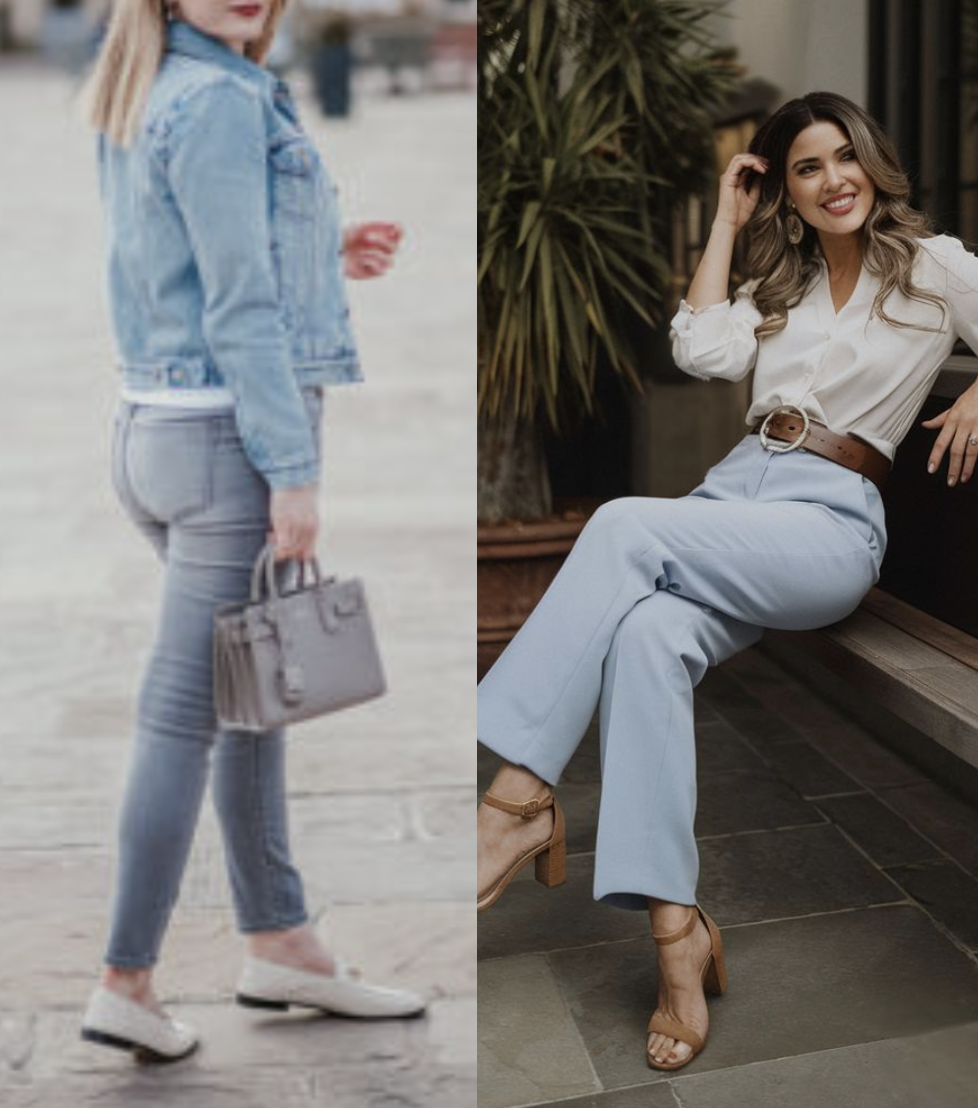
Shoes Can Make or Break an Outfit — Choose Wisely
Shoes are one of the most underestimated elements of an outfit. They’re often the last thing people think about, and that’s exactly the problem. Comfort is non-negotiable, but the right shoe can elevate an entire look — and the wrong one can quietly unravel it.
A few things to keep in mind:
Where the shoe hits. Where your shoe meets your leg matters more than most people realize. With a straight-leg jean, for example, a high sneaker that covers the entire foot can look chunky and dowdy. A flat or loafer that exposes a bit of the foot is a much cleaner line. Similarly, a bootie with a circle skirt can look awkward if only a sliver of ankle is showing — in that case, a tall boot that elongates the leg is a much better choice.
Match the weight of your shoe to the weight of your outfit. A chunky boot with a flowy chiffon dress creates visual chaos — one is heavy and structured, the other is light and delicate, and they’re working against each other. Heavier fabrics and more substantial silhouettes can handle a chunkier shoe. Lighter, more delicate outfits call for something more streamlined.
The “last thing you put on” test. Your shoes should feel like the finishing touch that pulls the whole outfit together — not something you grabbed because they were sitting by the door. If you put your shoes on and something feels off, trust that instinct. Also think about “anchoring” your outfit with your shoe choice — the color doesn’t need to match exactly, but it should either complement what you’re wearing or make a deliberate statement.
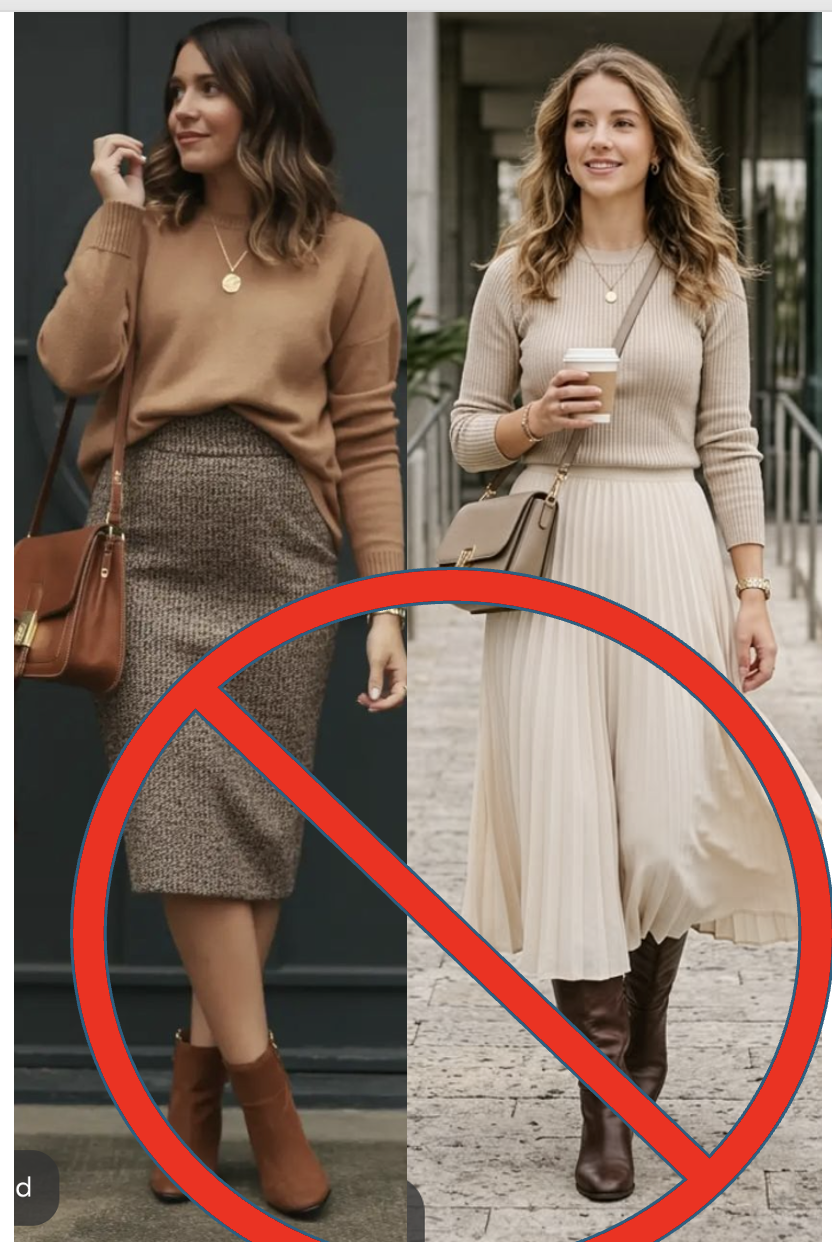
Fabrication Matters — Dress for the Season
Color-coordinating your outfit is one thing. But if your fabrics are sending completely different seasonal signals, the look won’t land no matter how well the colors work together.
Velvet and linen are a perfect example. Both can feel luxe and elevated, and both can complement each other on the color wheel. But velvet is a heavyweight, cold-weather fabric and linen is the definition of summer — putting them together creates a visual disconnect that’s hard to pinpoint but makes the whole outfit feel off.
A good rule of thumb: keep your fabrics in the same seasonal family. Linen, cotton, and lightweight chambray play well together. Velvet, wool, and heavier knits belong in the same outfit. It seems like common sense, but it’s one of the most frequent missteps I see.
And even when you’re not mixing fabrics from different seasons, watch out for wearing certain pieces out of season entirely. Keep the leather jackets and suede footwear for fall and winter — once it’s consistently above 80 degrees, it’s time to put them away.
Balance Is Everything
Fitted on top, looser on the bottom — or vice versa. That’s the tip.
When everything is tight, an outfit can feel one-note. When everything is oversized, it reads shapeless and overwhelming (see also: the midsection section above). But when you balance a fitted piece with a relaxed one, you create proportion, movement, and visual interest that makes an outfit feel intentional.
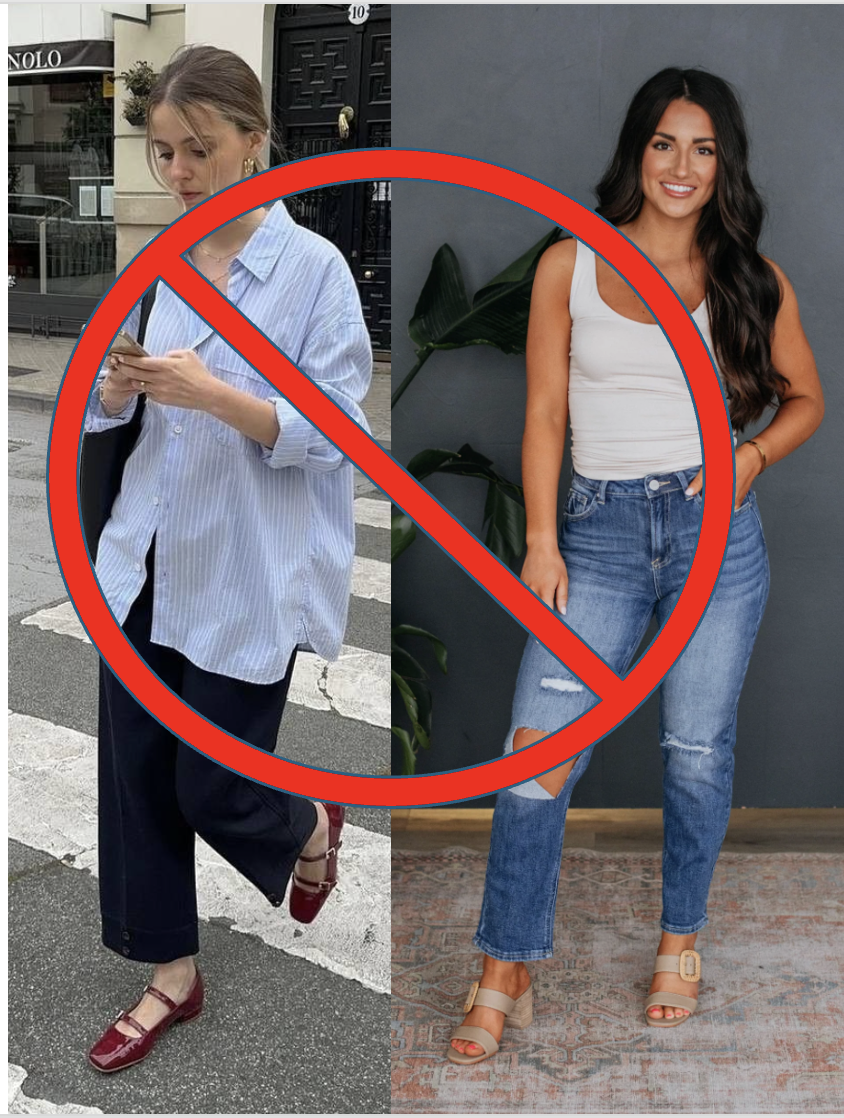
Think in terms of the two halves of your body. If your top half is fitted and highlighted, let your bottom half breathe — wide-leg trousers, a flowy midi skirt, relaxed straight-leg jeans. If your bottom half is more form-fitting — a pencil skirt, skinny jeans, a bodycon midi — balance it with something looser on top, like an oversized linen shirt, a cozy knit, or a boxy jacket.
The contrast is what makes it work. It’s not about hiding anything or following a formula — it’s about creating a silhouette that has shape and dimension. And as a bonus, balancing your proportions this way naturally helps define your waist, which brings everything full circle.
Don't Get Too Attached to a Silhouette
Fashion evolves — and if you're still dressing the way you did ten years ago because it worked then, it's probably working against you now. That doesn't mean you need to chase every trend or overhaul your wardrobe every season. It just means staying open to the idea that silhouettes shift, and clinging to an outdated one can make an otherwise great outfit feel stuck in a different era.
The skinny jean and long tunic combo is a perfect example. For a long time, that pairing made complete sense — the skinny jean called for a longer top to balance the proportions. But silhouettes have moved on. The long tunic now reads dated, and the skinny jean has largely been replaced by straighter, more relaxed cuts that feel more current.
The good news: you don't have to abandon your personal style to stay relevant. If you loved that tunic-and-skinny combination you just need to update the execution. Swap the skinny for a straight-leg or barrel-leg jean, and trade the long tunic for a top that's looser and more relaxed but hits at the hip rather than mid-thigh. Same general vibe, much more modern result.
Think of it less as following trends and more as periodically checking in with what's current and asking yourself if there are small updates that feel right for you. You can absolutely have a signature style — just make sure it's evolving with you.
IN CONCLUSION
Getting dressed doesn’t have to be complicated. Keep these tips in your back pocket and treat them as a starting point, not a checklist. Style is still personal and should reflect your preferences! But if you are totallay lost and getting dressed feels hard, keeping these guardrails in mind can help you get started.